

Consider Vincent van Gogh. At the start of his painting career, after he’d been fired from the ministry, he envisioned paintings in his mind’s eye that he knew that he couldn’t yet produce. They existed in his brain but he wasn’t proficient enough to render them on canvas.
 He could have stared at those beautiful images, complained bitterly that they were doomed to remain mental images only, and thrown in the towel. Instead he chose a different route, the route of work. For months on end he practiced making the kinds of strokes that would enable him to paint what he saw in his mind. A cypress required this set of strokes; a fern, this set; a poplar, this set; irises, this set. He practiced and remained productive. When he felt that his repertoire of strokes was ready, he began painting. We know the results.
All of the following are myths worth busting:
+ Myth: A productive obsession must be fueled by passion and love.
Reality: Love and passion are splendid but what actually fuels a productive obsession is that you have good reasons for pursuing it.
+ Myth: The proof that a productive obsession is worth pursuing is that it feels easy.
Reality: Thinking is not easy and doing is not easy. Together, they are not easy squared.
+ Myth: If a productive obsession isn’t fun, why bother?
Reality: Our life purposes include joy but they also include a variety of other values. “Fun” is not the only value to honor and revere.
+ Myth: You are working on your idea even if you are only thinking about it.
Reality: Ideas require elaboration in order for them to grow. Only rarely can that elaboration be done entirely in the mind. As a rule, it must be done at the computer, at the piano, at the easel, in the trenches.
+ Myth: The only difference between a productive obsession and an unproductive obsession is that one is positive and the other is negative.
Reality: Unproductive obsessions represent the misuse of your mind, the habitual giving away of neurons, and a resultant small existence. Productive obsessions represent your willingness to use your mind in the service of authentic action. This goes far beyond “positive” and “negative.”
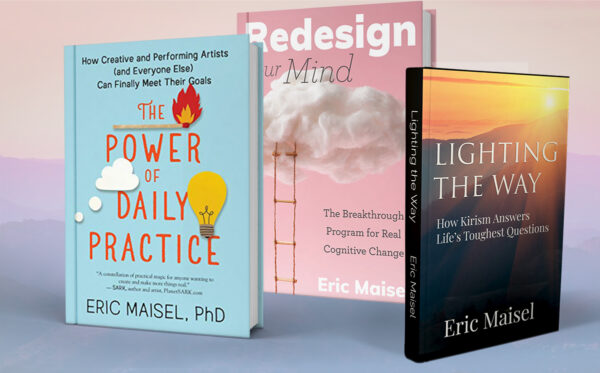
To learn more about the ideas presented in this blog post, please see two of Dr. Maisel’s titles, Redesign Your Mind: The Breakthrough Program for Real Cognitive Change and Brainstorm: Harnessing the Power of Productive Obsessions
—
The post Busting 5 Productive Obsession Myths appeared first on The Good Men Project.